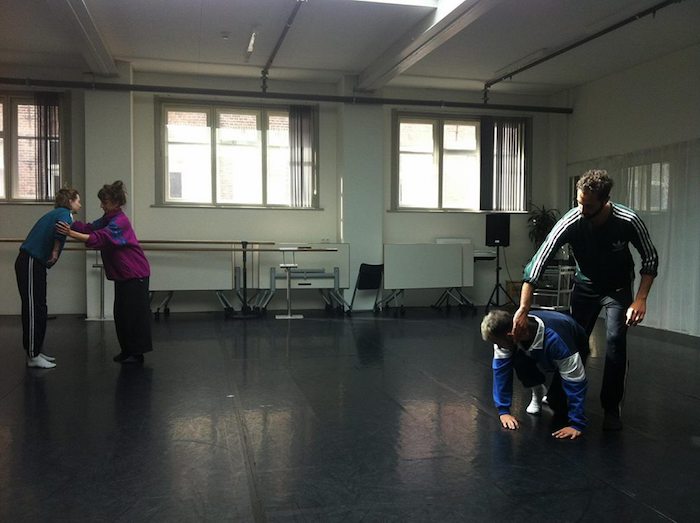
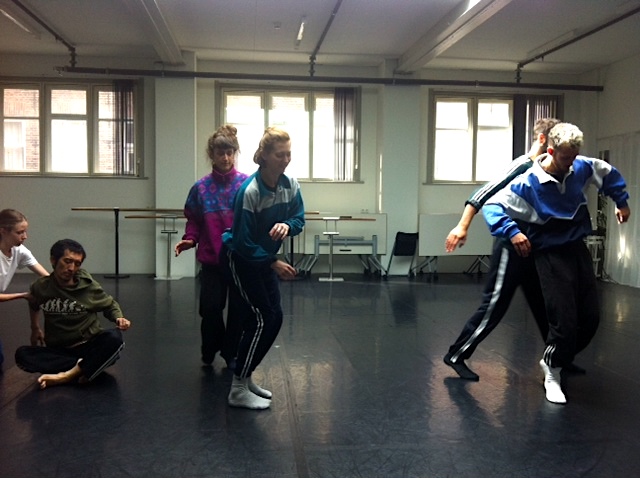
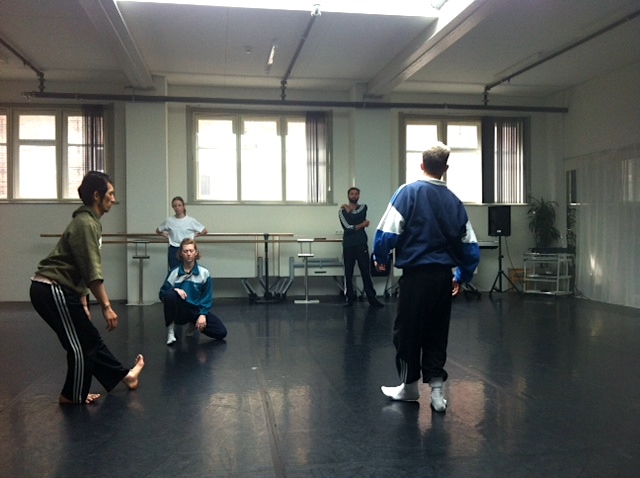


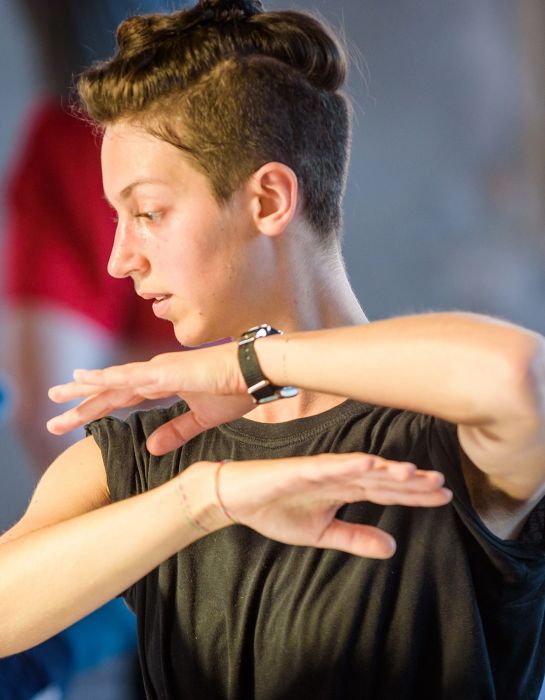
ATE Methodology practice classes:
The ATE methodology stands for Accountable Temporary Expedients. It is a fluid, experiential methodology for choreographic improvisation and composition that challenges dancers to embrace and work with states of confusion, doubt, and uncertainty.
Key Aspects of the ATE Methodology:
Focus on Doubt and Confusion: The core of ATE is the integration of doubt and confusion, leading to an “embodied cognition” and new decision-making processes. It aims to make dancers resilient to the discomfort that uncertainty can provoke and able to share that uncertainty with an audience.
Challenging Habits: Baldini views traditional dance as sometimes “stuck” in its own habits. ATE is designed to disrupt these automatic patterns, encouraging participants to attend to multiple stimuli simultaneously and step outside of their comfort zones.
Generative Process: ATE functions as a set of instruments that prepares the body for real-time composition. Movement is used as a source that provokes “side effects,” which can manifest as drawing, text, sound, or photography.
Performance and Audience Interaction: The methodology is applied in both solo work and group settings. In performance, it can create a feedback loop where the audience is invited to interact with elements of the work, further influencing the real-time composition.
Dissemination: Baldini has created a deck of cards based on the ATE methodology to help communicate the practice to others, using suggested tasks, notions, triggers, and distortions.
The methodology is a response to the idea that dance should constantly emancipate, instead arguing that dance needs to “wake up” and listen to what it doesn’t already know
“Accountable temporary expedients” uses task-based improvisation. An “expedient” is a practical tool for a specific situation, “temporary” means it’s not a permanent solution, and “accountable” means the practitioner considers the consequences of the action within that context. ATE is used to provoke a more embodied, intuitive, and responsive form of dance that moves beyond habit.
Key principles of Accountable Temporary Expedients
Accountable: The tasks are mindful of their immediate consequences in a specific performance setting.
Temporary: The “expedients” or tasks are not universal; they are useful only for the current situation and are not meant to be applied to all circumstances.
Expedient: The tasks are practically useful in the moment of action.
Improvisation and Composition: ATE is a tool for both improvising in the moment and for choreographing future work.
Embracing Confusion: The practice challenges dancers to attend to multiple stimuli at once and encourages embracing doubt and uncertainty to foster new decision-making and “emergent embodied cognition”.
Beyond Habit: ATE aims to break dancers out of self-indulgent habits and create a more raw, responsive, and less predictable form of danceAs a freelance dancer and performance artist working across different disciplines, I have been teaching and choreographing, taking my work to international festivals such as Venice Biennale and various Fringe Festivals since 2010.
I am enthusiastic about sharing the principles of with those who have an interest in challenging their givens, whichever may be their backgrounds.
OPEN PRACTICE – ATE methodology:
4-5 July 2026; 10:00 – 13:00h
PARTICIPATION
: 1 day is €25 2 days €40.
Questions: email ipivia@gmail.com or message +31 617 959 976
REGISTRATION
4bidgallery@gmail.com
ADDRESS
4bid gallery, OT301
Overtoom 301
, 1054HW Amsterdam NL

